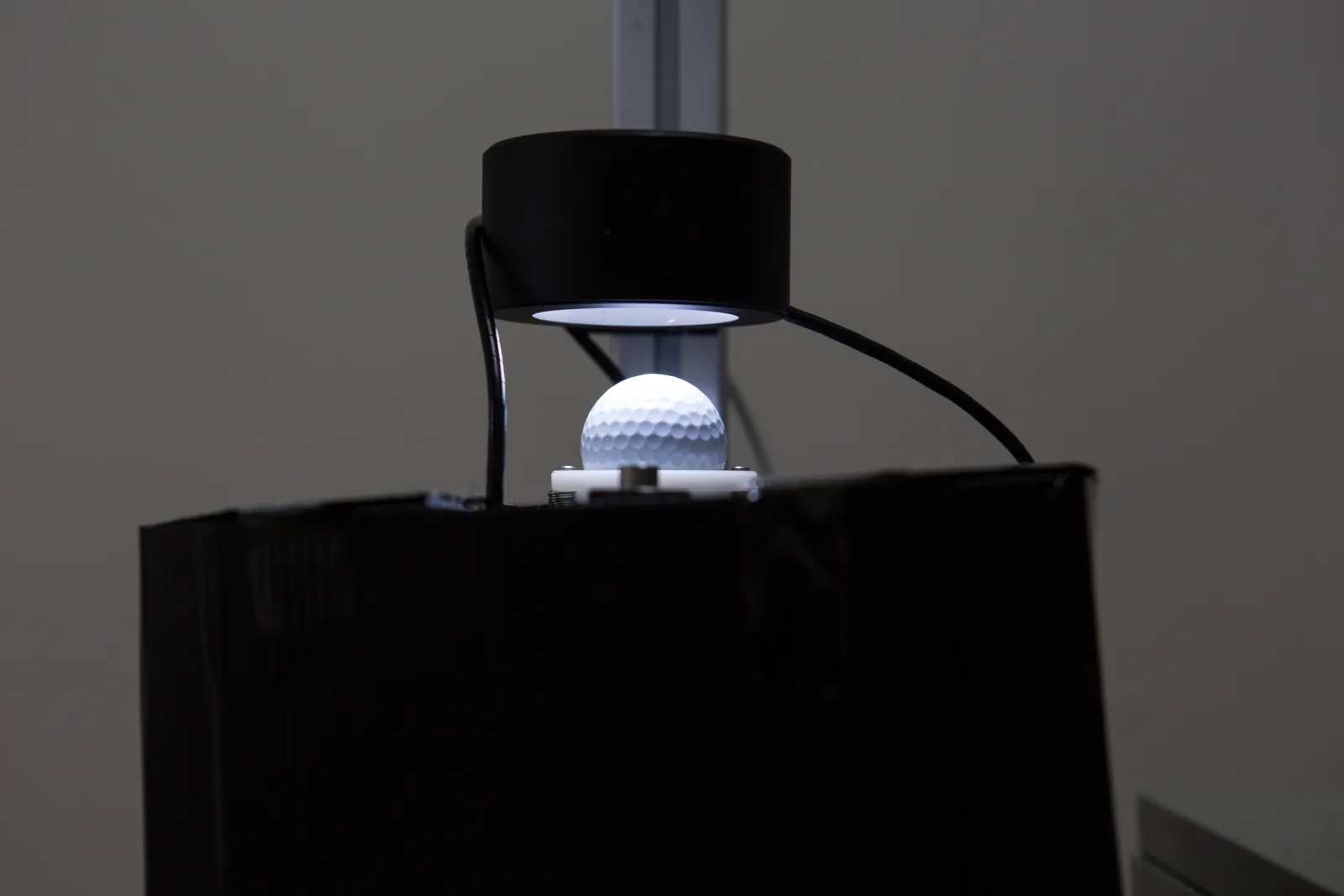
Did you know that a single small golf ball has as many as 28 defect types to inspect? A human inspector can check 500 balls an hour; with AI inspecting for defects, 6,000 balls can be checked an hour. The AOI automated optical inspection technology developed by AIWin achieves a miss rate of 0.1%, 10 times better than the human eye. Beyond the golf ball industry, AIWin's AOI inspection will also be adopted in textiles and other industries.
AIWin founder and CEO Aaron Lin is an expert in artificial intelligence (AI). As early as 2013 he sensed the future promise and explosive potential of deep learning (DL) and AI image recognition. AOI has long been a strong need in manufacturing: it mainly helps manufacturers raise product quality so that the quality of shipped goods stays consistent, and the data from AOI inspection results can also be used to improve processes, bringing process improvement into a virtuous cycle and further cutting costs.
Because the human eye is subject to uncontrollable factors such as fatigue and inconsistent standards, inspection runs into a bottleneck. Even with training, the lowest miss rate the human eye can achieve is around 1–2%, and it only gets worse over time. AOI is stable equipment capable of high-volume inspection, and AIWin reaches a miss rate of 0.1%, 10 times better than the human eye, equivalent to a detection rate of 99.9%. Of course, AOI also produces an overkill rate of 5–10%, which staff can then screen manually. With AOI assistance, the burden of quality inspection is lighter and considerable working hours are saved.
AOI Inspection of Golf Ball Defects: Hourly Inspection Capacity Grows 12-Fold
The first testing ground for AIWin's AOI technology was the golf ball. A golf ball's surface is dimpled and highly reflective, and in the past defects were inspected manually one by one. A single small golf ball has as many as 28 defect types, and one person can inspect 500 balls an hour. To meet the requirements of its Japanese customers, a major Taiwanese golf ball manufacturer adopted AOI inspection two years ago. A high-speed, high-precision AOI optical image inspection system combined with AI deep learning image recognition inspects golf ball surface defects, with fully automated loading and unloading, to replace the missed detections of manual inspection. It records and reports defect conditions in real time, and each machine can inspect 200,000 dozen golf balls a year, greatly improving customer satisfaction. But this step took AIWin more than two full years...
▲ Golf ball AOI recognition in action
▲ Golf ball AOI recognition: none of the 28 surface defect types can hide
Aaron Lin explains that it starts with data assessment and consulting, followed by data organization and labeling, AI algorithm selection and validation, and AI training services. The golf ball data had to be accumulated record by record from scratch; fortunately, the golf ball manufacturer gave its full cooperation, and the effort finally bore fruit. For AOI inspection of golf ball defects, a person can typically check 500 balls an hour; with AI, 6,000 balls can be inspected an hour, a 12-fold gain.
Unlike other companies, Aaron Lin believes AI requires deep domain work to grind out specialized data, because only domain data can make AI perform well. That is why the company started with project work rather than setting out to build an AI product from day one: without good data or a focused domain, even the best algorithm cannot make AI succeed. Over the past few years AIWin has accumulated project experience and gradually developed products. Beyond its focus on domain data, AIWin also provides customers with the latest AI algorithms and grows together with them. As a result, rather than raising funds externally, AIWin's investors are its customers or partners, forming an even closer collaborative relationship.
From Assessment to Go-Live: AI Adoption Takes Six Stages
Every project AIWin takes on is divided into stages: 1. assessment; 2. proof of concept (POC); 3. data collection; 4. iterative validation; 5. the AI virtuous cycle; and 6. go-live. The assessment stage is an early understanding and evaluation of the domain conditions on the customer's side. Next comes POC validation; after the POC, large volumes of data are collected and the project enters iterative validation; finally, the AI enters the virtuous-cycle stage, and once it reaches a certain level of effectiveness it can formally go live. Generally, a project takes six months to a year of hard work. For more familiar PCB AOI projects, however, the first two stages are skipped entirely and work starts from data collection, which shortens the timeline considerably.
"The question that comes up on this project and every other project is: how much data is enough, and when will the AI learn it?" Faced with questions like these, Aaron Lin points out that they arise for two reasons: 1. deep learning is technically unexplainable, because it is a black box; and 2. customers generally have no frame of reference for AI technology. So the company has to patiently validate the data over and over, identify the data the AI needs, accumulate and test it, and clarify and resolve every domain condition one by one. This takes a great deal of time and patience.
During AI adoption, customers have high expectations of AI, believing that once AI services are brought in, manpower can be replaced immediately. Aaron Lin points out that this is not the case. In reality, the value of AI comes from accumulating large volumes of high-quality data, transforming and analyzing it, and building AI training and validation models; only then can the problems created by manual work be fully solved.
Beyond golf ball inspection, AIWin is currently working on adoption for textile products such as fabrics and shoelaces, and many industries have run POCs with AIWin, including semiconductors, PCBs and other traditional industries.
▲ AOI fabric defect inspection: before AOI inspection was adopted (top) and after (bottom)
Aaron Lin notes that the hardest parts of building the company have been developing talent and managing customer perceptions. Customers usually want to see results quickly, not realizing that AI adoption requires accumulating data and repeated validation, a process that cannot show results in less than six months.
With the shock of COVID-19, the trend toward globalized, centralized manufacturing supply chains has been broken, replaced by "short, regional" supply chains. In other words, small but excellent factories will spring up everywhere. Does this bring new business opportunities for AOI? Aaron Lin says that high levels of automation do indeed create opportunities for AI automated inspection, but the capital investment is relatively high, including automation equipment, host computers, GPUs and enough AI operations talent, which is beyond what small and medium-sized enterprises or small factories can afford. Government funding and resources are needed for them to make the transition smoothly.