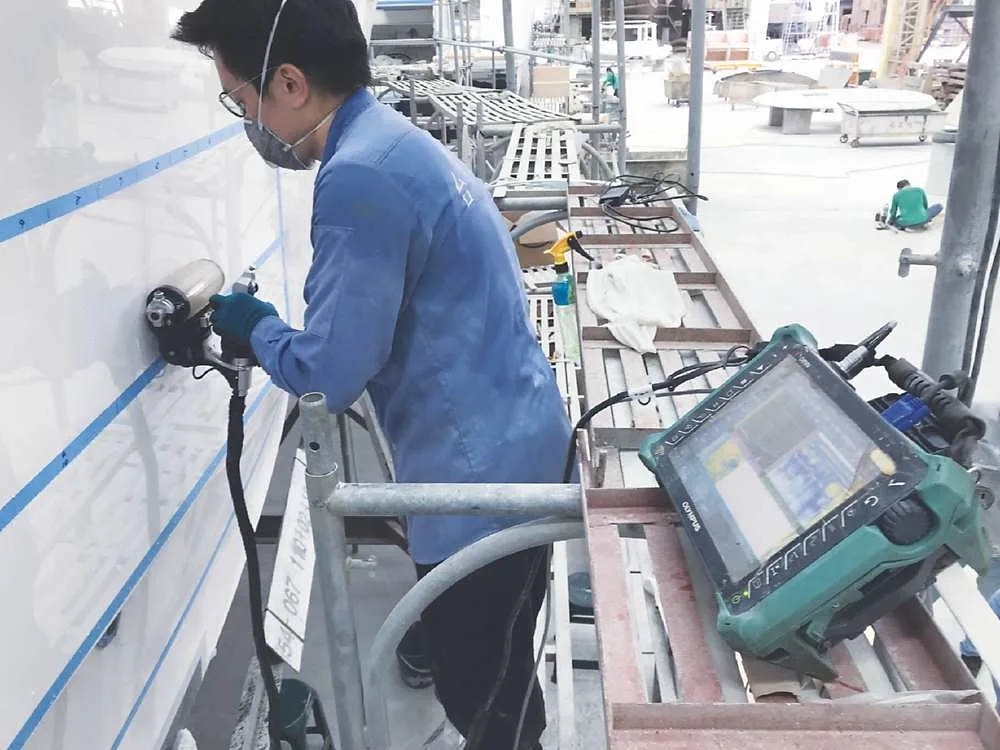
AI is now being used in the specialized field of non-destructive testing! Taiwan Metal Quality Control Co., Ltd., known for its R&D strength, has achieved a major technical breakthrough in applying AI to weld inspection, successfully developing automatic interpretation and evaluation technology that is expected to greatly improve the accuracy and efficiency of weld inspection.
As industry gradually adopts AI, professional NDT provider Taiwan Metal Quality Control has joined forces with AIWin and Microtek in a three-way cross-domain collaboration to develop AI automatic interpretation and evaluation technology for weld radiographs, with R&D funding support from the Ministry of Economic Affairs. The goals of the first phase have reportedly been met: interpretation accuracy currently reaches about 92%, and interpretation speed is several times that of manual reading. The second phase, scheduled for completion by the end of 2021, is expected to deliver even greater benefits through big data and AI deep learning, with interpretation accuracy expected to reach 100%. It will also incorporate national standards such as Taiwan's CNS, Japan's JIS and the United States' ASME, so that inspection better meets customer needs.
Taiwan Metal Quality Control General Manager Huang Chi-Chen (黃啟貞) says the non-destructive testing industry faces challenges in talent and knowledge transfer. Because passing on expertise in the industry is difficult, and in order to improve the efficiency of weld inspection and similar work, the company teamed up with leaders in AI technology and image scanning to jointly develop AI automatic interpretation and evaluation technology starting in March 2020. The first phase has now been completed and met its targets, and the second phase is beginning immediately. With big data and AI deep learning, he believes interpretation accuracy can reach 100%, which will not only meet the needs of non-destructive testing operations but could even develop into a turnkey business model that reaches international markets.
In line with the government's policy of actively developing the wind power industry, Taiwan Metal Quality Control, beyond its materials inspection services, has also invested in developing inspection technology and equipment for the follow-up inspection of operating wind turbines, to meet the needs of wind power equipment inspection and maintenance.
Taiwan Metal Quality Control has many self-developed advanced instruments and equipment, together with professional inspection experience, technology and a professional team. It has obtained 24 TAF national laboratory accreditations, including ultrasonic testing, radiographic testing, magnetic particle testing, liquid penetrant testing, thickness measurement and eddy current testing, as well as international certifications including ISO 9001, OHSAS 18000, classification-society thickness-measurement certification, advanced qualification certification and GE Supplier Qualification.
Source: https://readers.ctee.com.tw/cm/20210929/a71asa1/1147463/share