
Author:
Aaron Lin (林耿呈)
CEO, AIWin Technology Co., Ltd.
AIWin Technology Co., Ltd., CEO
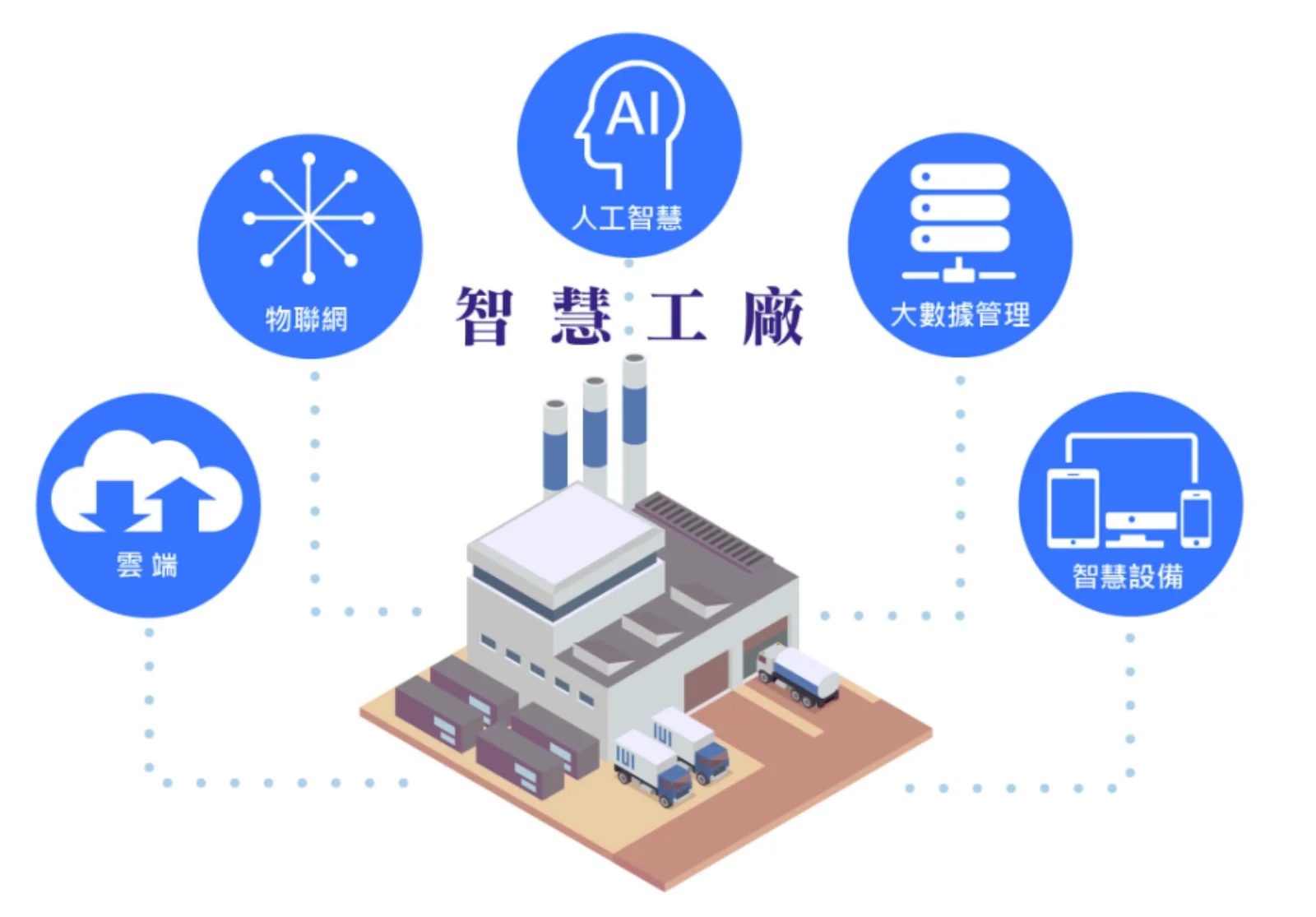
Industry 4.0 is one of the high-tech strategic initiatives proposed by the German government. Its main aim is to raise the level of computerization, digitalization, automation and intelligence in manufacturing, and further to bring the Internet of Things, big data, the cloud and artificial intelligence into the factory to create a Smart Factory that is adaptive, resource-efficient and ergonomic. In automation engineering, fitting a sensor to a machine is the common approach today, but it is limited to single-machine, single-function monitoring and cannot realize the concept of a connected Internet of Things. With the development of smart sensors and data communication technology, however, information can be linked together to form big data. Yet a huge pile of data that has not been analyzed and interpreted to produce useful information has no value. The big data created by connecting everything across every stage of production in a smart factory is worthless unless it is analyzed, so AI technology is needed to evaluate, regress and analyze it. Applying AI effectively to such enormous volumes of data will be a challenge. Deep learning is one AI technique whose advantage is that it can learn and analyze on its own from large amounts of data; the trade-off is that deep learning brings a very heavy computing load. How to combine deep learning with big data to deliver useful data insights and analysis effectively will be the opportunity and the challenge every company faces in the years ahead.
The Industry Structure of the Smart Factory
Driven by Industry 4.0, the global smart factory market is growing year by year. A smart factory combines hardware, software and system integration so that production is equipped with sensing and the Internet of Things (IoT), data collection and analysis (big data), artificial intelligence (AI), cyber-physical system integration and human-machine collaboration. Taiwan's smart factory industry chain is structured into six links (see Figures 1 and 2): 1. industrial computers and robots; 2. automated product design; 3. automated production and manufacturing; 4. automated material storage and transport; 5. automation system integration planning; and 6. innovative automation applications. Across these six areas, major companies, research institutes and universities have each staked out their positions, but Taiwan's industry still leans heavily toward front-end hardware deployment, while back-end automation system integration and integrated planning of data-collection software make up only a small share. Analysis by Taiwan's research institutes finds that the country lacks the final link: the AI-enabling of data, cloud computing software development and information-integration equipment providers (see Figures 2 and 3). Most manufacturing plants in Taiwan and mainland China today are still somewhere between Industry 2.5 and 3.0 (the semiconductor industry excepted), and every factory hopes to use Industry 4.0 to manage effectively, control quality and streamline its workforce. In its move toward Industry 4.0, the global giant IBM defines and classifies four major areas:
1. Factory automation: raising production efficiency through intelligent robots and automated equipment
2. Factory networking: connecting machines and equipment, and using IoT and cloud technology to manage production processes remotely
3. Factory intelligence: collecting and analyzing production data to identify the variables that affect product quality and equipment efficiency, and optimizing them
4. Factory virtualization: integrating production equipment with management systems, fully digitalizing the production process, and simulating and analyzing product design and production lines
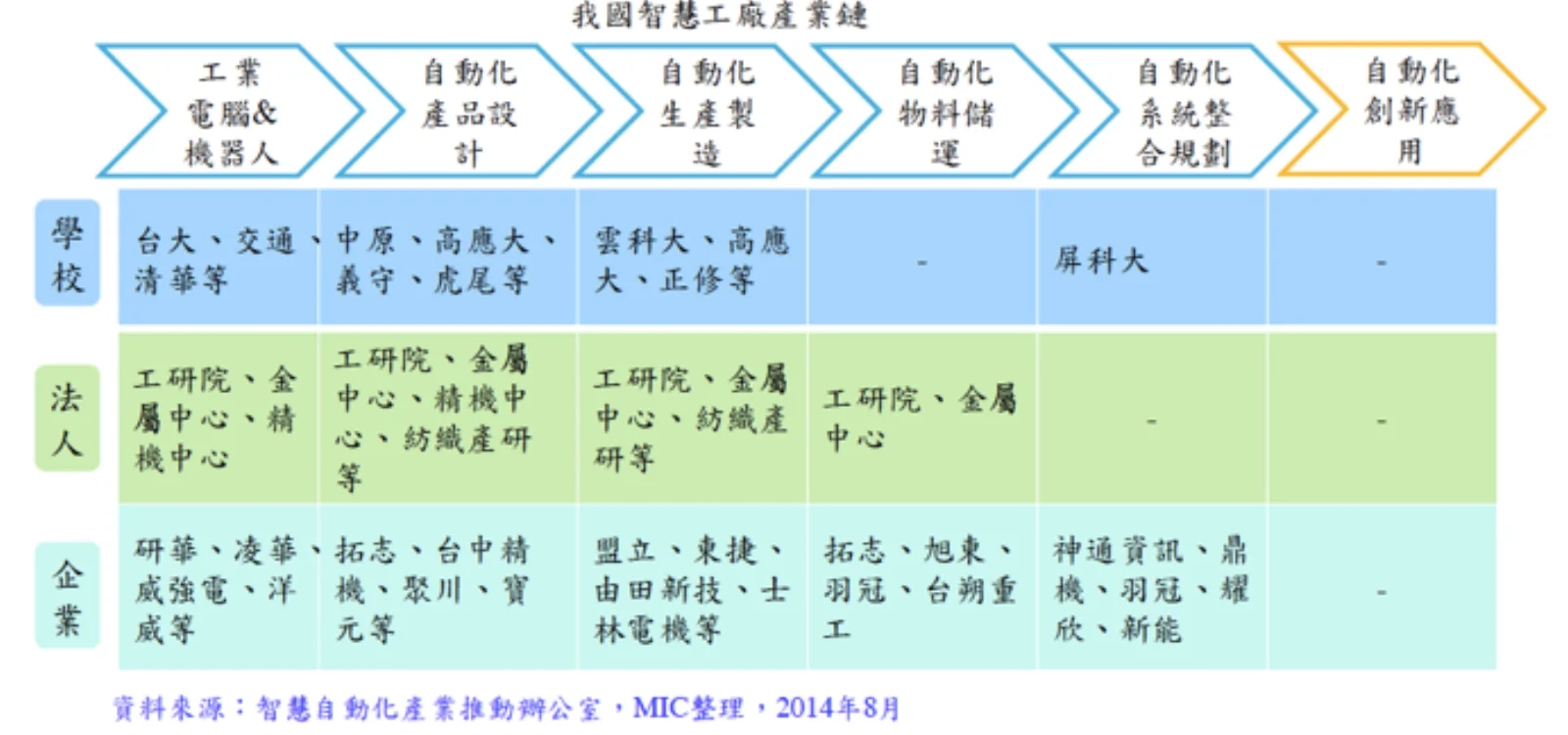
▲ Figure 1: Structure of Taiwan's smart factory industry chain (Source: compiled by MIC, August 2014)
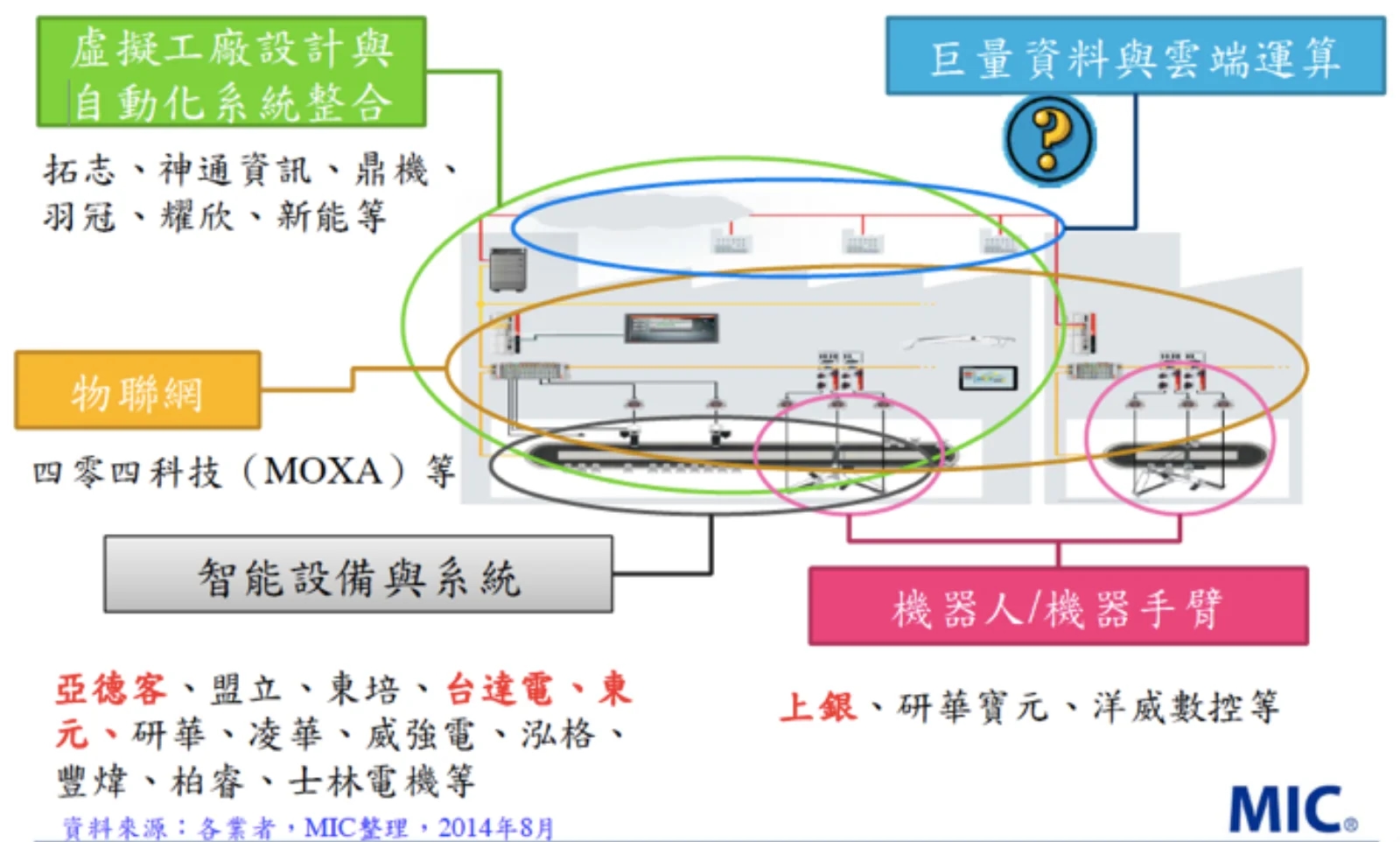
▲ Figure 2: Structure of Taiwan's smart factory suppliers (Source: compiled by MIC, August 2014)
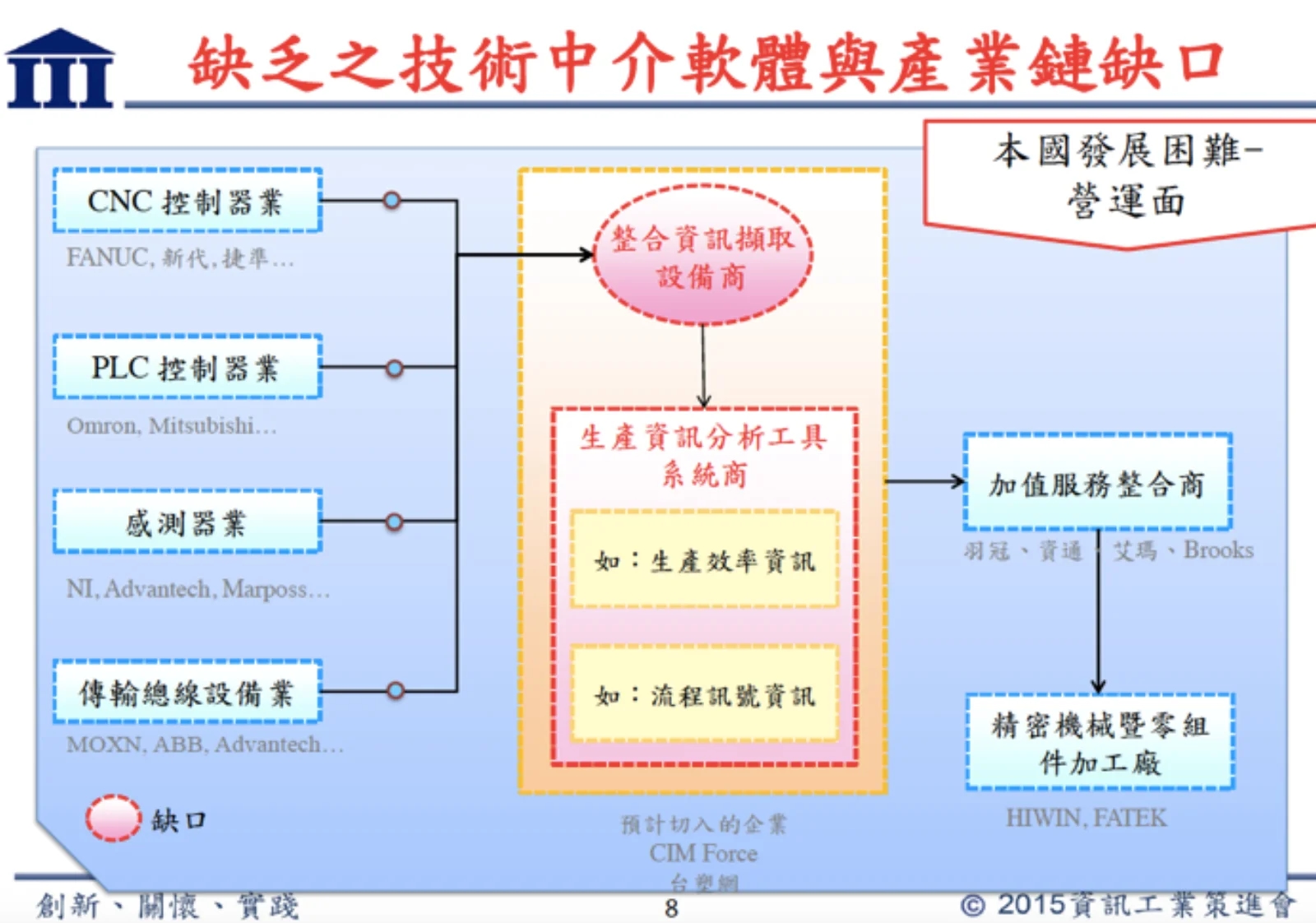
▲ Figure 3: Gaps in the Industry 4.0 industry chain (Source: Institute for Information Industry, 2015)
In response to Industry 4.0, Taiwan also put forward its Productivity 4.0 development guidelines. Taiwan began promoting industrial automation in the 1980s, driving Productivity 1.0 through 3.0 and effectively raising output per capita (as shown in Figure 6), which laid a solid foundation. Productivity 4.0 emphasizes using technologies such as intelligent robots (automated equipment), the IoT and big data to drive intelligent industrial equipment, smart factories and cyber-physical systems, in order to raise added value and productivity. Productivity 4.0 will focus on intelligent automation, which comprises 1. signal sensing, 2. data processing, 3. intelligent decision-making and 4. actuation control. According to the statistics of these research institutes, information integrators and intelligent analytics are the biggest gap in the smart factory, and also the niche where startups can enter.
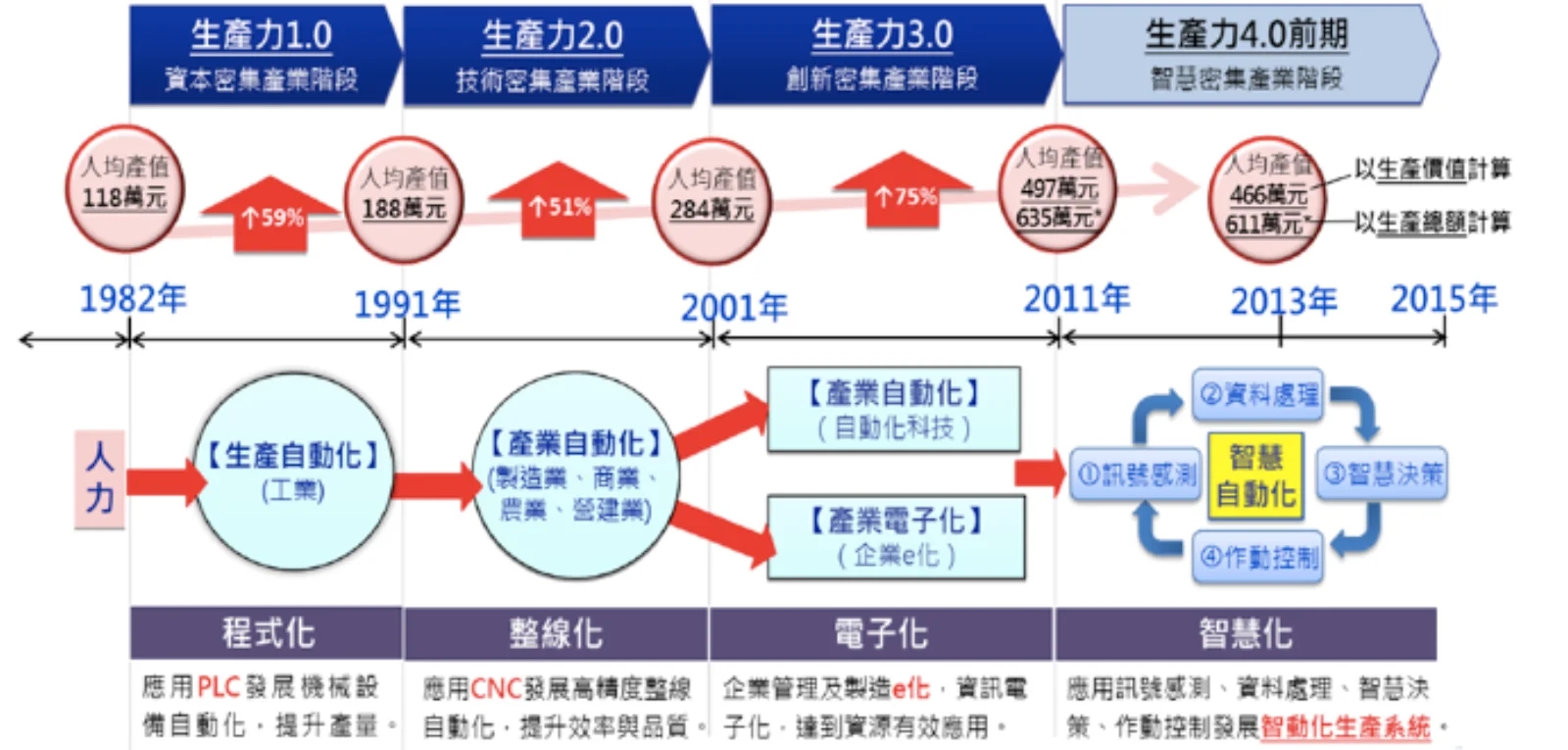
▲ Figure 4: The evolution from Productivity 1.0 to Productivity 4.0 and output per capita (Source: Institute for Information Industry, 2015)
The Smart Factory Market
According to 2015 statistics from the Market Intelligence & Consulting Institute (MIC) (see Figure 5), the global smart factory market exceeded US$180 billion in 2015 and is expected to grow by around 10% every year. Automation equipment and industrial robots account for 90% of the total, while the data analytics market will grow fastest, with its overall size forecast to grow by more than 30% by 2018.
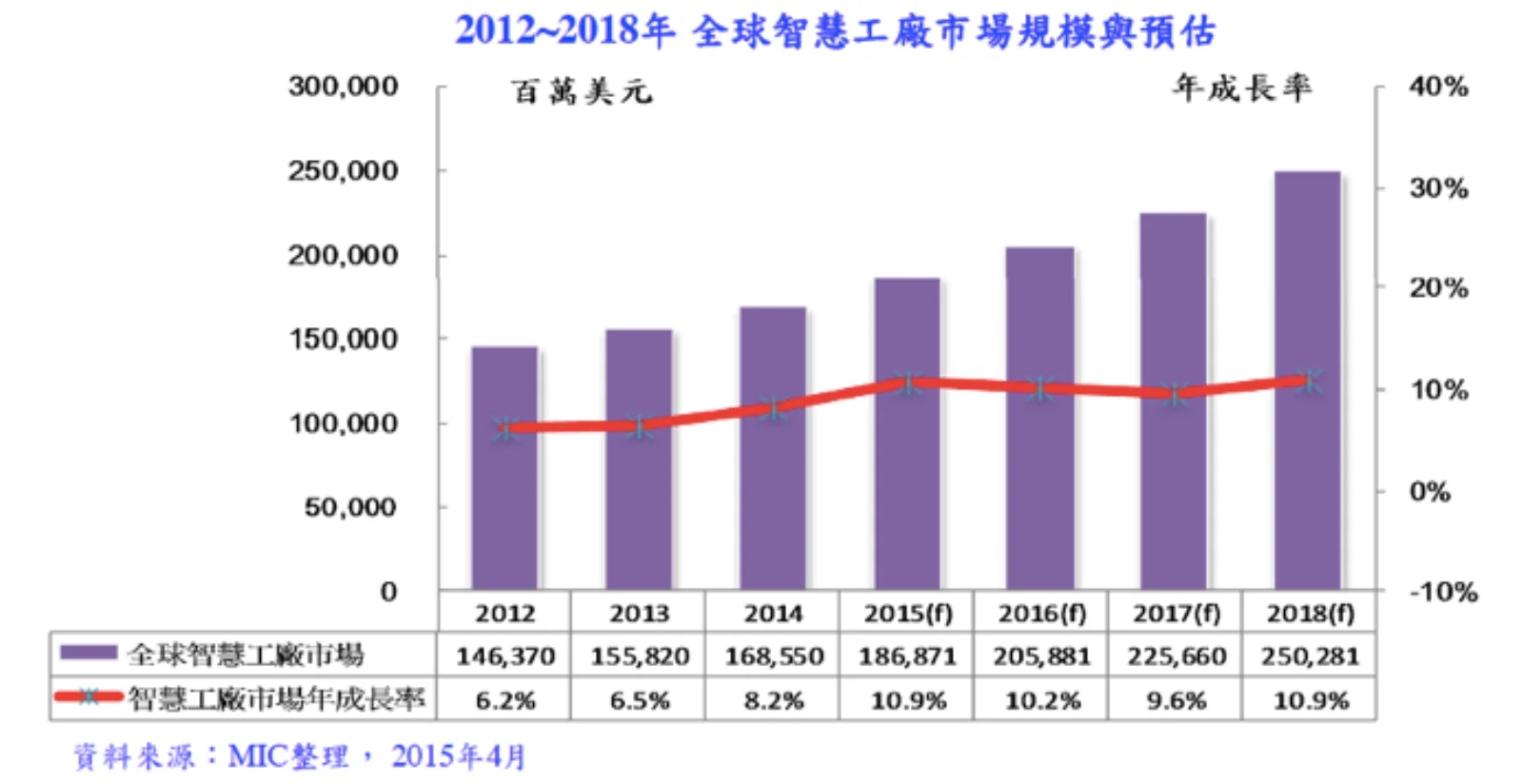
▲ Figure 5: Global smart factory market size and forecast, 2012–2018 (Source: compiled by MIC, April 2015)
In its forecast for the industrial automation equipment and control technology market, MarketsandMarkets' October 2014 report identified the largest market segments for 2015–2020 as DCS (Distributed Control Systems), ERP (Enterprise Resource Planning), PLM (Product Lifecycle Management), industrial robots and industrial control equipment (motors and drives, relays, switches and sensors). By 2020, the global DCS market is forecast to reach US$81.6 billion; ERP US$68.3 billion; PLM US$42.7 billion; and industrial robots US$39.1 billion (as shown in Table 1 and Figure 6).
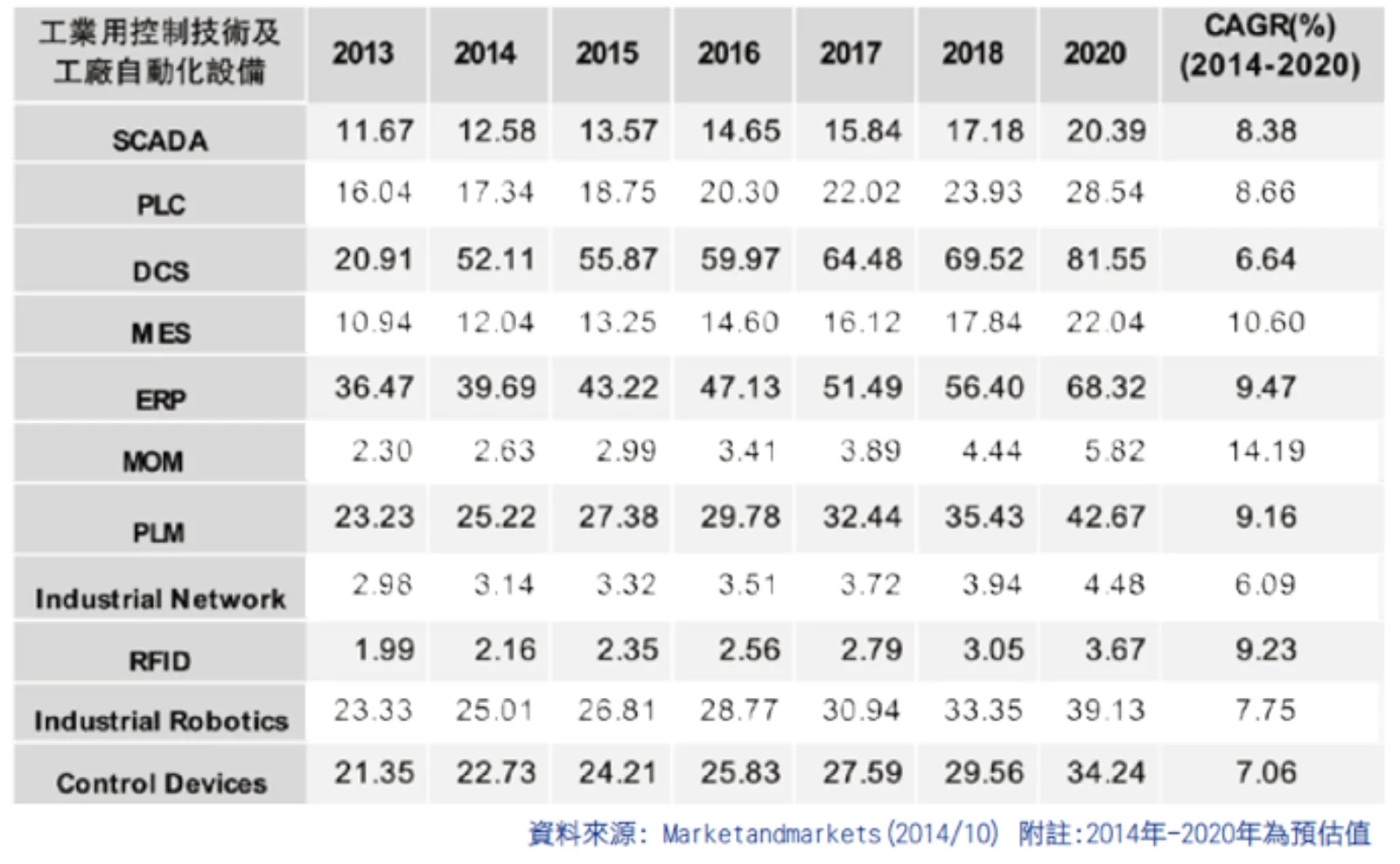
▲ Table 1: Market size of industrial control technologies and factory automation equipment, in billions (Source: MarketsandMarkets, October 2014)
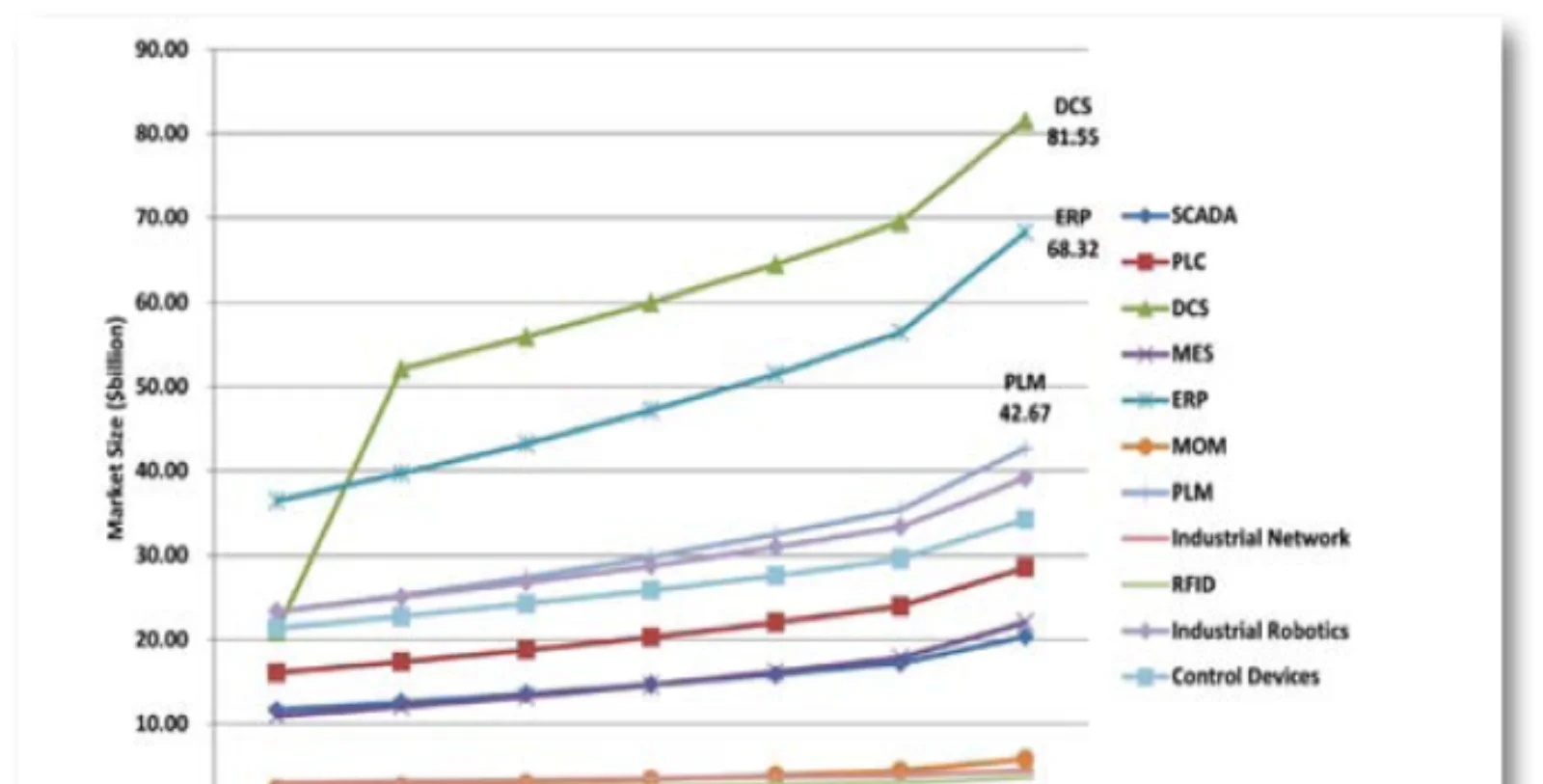
▲ Figure 6: Market size curves for industrial control technologies and factory automation equipment (Source: MarketsandMarkets, October 2014)
The DCS market is forecast to reach US$81.6 billion in 2020. This reflects the effect of the IoT on smart factory development: distributed control systems will be deployed on every piece of equipment and their information integrated in the cloud to form big data, and demand for information integration and big-data analytics will grow accordingly.